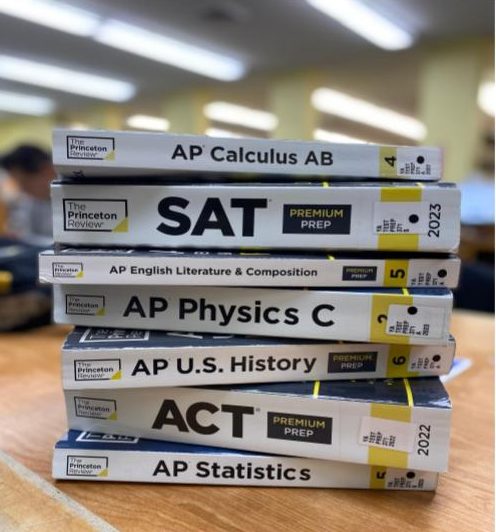

























Students worldwide are often stumped with the decision to choose between the major they love or to choose the major that makes the most money. In popular internet subculture, there is a saying that goes, “If money didn’t matter, I would be a…” and it’s often followed up by the name of a profession that’s correlated with the humanities.
Why is it that society has shaped the world in a way where professions are judged by how much money they accumulate instead of how much personal value they have?
All aspects of this specific kind of discrimination arguably can correlate with the rise of anti-intellectualism, the patriarchy and simple misconceptions.
To provide some background, the humanities has been a predominately male-dominated field when it was first introduced back in Ancient Rome. Its resurgence during the Renaissance time period is the reason why the modern education system even exists. When ideas branched out from both scientific and literary research, the world experienced one of the greatest eras of all time. So what happened? During the Industrial Revolution, there was a calling for more manual and technology-heavy labor which is when men diverted their focus from humanities to the sciences, leaving women with the books. As the market value for scientific research increased, humanities was left to fend for itself which is why it’s often deemed as the “no money major.”

In the current generation, due to STEM fields being oversaturated due to the promise of better financial stability, the job market is quite equally terrible for both majors. Many are unable to land a job despite having a computer science degree due to the rise of artificial intelligence in the field, and humanities majors who want to pursue teaching are often stumped with the infamously low pay.
But should the amount of money offered define what someone wants to learn?
Mr. Falco, a STEM teacher at FHHS shared some insight on how scientific subjects are often misunderstood, even by the people studying them. “People assume it’s not creative. Science is all about thinking outside the box and problem solving. It’s a lot of creativity and design.”
The discourse between science and humanities is evident as well. “There’s tremendous amounts of reading and writing in science, while having scientific knowledge enriches literary metaphors. I think both stories and the sciences capture being human, just in different ways. When you understand both, I think you come to have a richer understanding of humanity,” he said.
He shared that he originally went to college to be a music teacher but became interested in physics through exploring more subjects. The advice he provided for students who are interested in the sciences but intimidated by it is just to “Jump in. Follow your interests wherever they lead you.”
Instead of overthinking one’s future, people should focus on what brings them happiness.
Dr. Belesis, a social studies teacher and Law Coordinator at FHHS, reinforced the importance of law and history in education by stating “They’re the foundations. The foundations for everything in life, including STEM programs, is theory.”
She used historical examples to enunciate her claim. “We have something in Ancient Greek philosophy called the Apollonian and the Dionysian. The Apollonian is someone that uses reason and sciences and the Dionysian is someone who focuses on the humanities, who’s more on the entertainment side. It’s believed that a person who has qualities of both will be a well equipped person to not only be a civic participant in society, but some day become a leader in society as well.”
Criticizing a subject is a privilege most people don’t have, hence when provided the opportunity to enhance one’s skills in both the sciences and humanities, they should take advantage of their resources.

STEM and humanities, the most competitive rivals in the academic world despite the disadvantages that come with it. When these two subjects collaborate, they have the power to reform the world, yet society has everyone convinced that one is better than the other. Both of these subjects are crucial to understanding the nuances of life.
Experts in the field will always recommend that students venture out and gain skills that are compatible with their interests instead of blindly following a trend in the hopes of a “better financial future.”
Loving the job that you choose is a rarity in this society. STEM doesn’t exist without literature, and literature doesn’t exist without STEM.
Similarly, humans can’t exist without their love and optimism for the world, hence why one should pursue their dreams instead of following the money.