




















Winter is here to stay with the inclement weather this late into January. After Regents week, the school year spools back up for a short time, only to be unwound by the arrival of mid-winter recess. In this brief window of activity, every student can feel the headrush of the spring semester coming through.
The music of Viktor Tsoi, covered in a previous Welcome to the Underground article, was perfect for coasting through the stillness and inaction of winter breaks. Yet, as the spring semester warms its engines and readies itself and all students for a long haul to the end of the year, something with more energy is needed to keep pace.
Thankfully, Tsoi and his bandmates engaged in far more than just music-making, going beyond the stage and onto the silver screen in two three films which themselves became hallmarks of Russian cinema on the verge of Soviet dissolution. The first, a focused look into the underground rock scene of the Soviet Union. The second, a story of political and societal reform reaching the furthest climes and corners of society. The other, a close study of the criminal underworld.
Our first story…
“Yah-ha.”
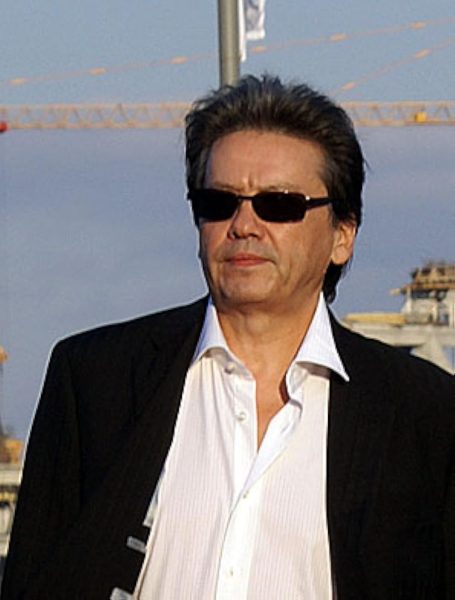
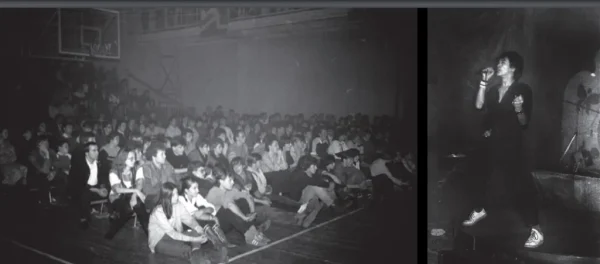
Two brothers in Alma-Ata, Kazakh SSR (modern-day Almaty, Kazakhstan), Murat and Rashid Nugmanov started a zine on rock music in the 1980s. Though it didn’t last long, Rashid’s love of rock only grew and came to encompass part of his love of the arts as he moved to Moscow and studied at Gerasimov Film Institute. In his time there, he wrote a film about an underground film scene.
Rashid conferred with another student of the institute, Andrei Mikhailov, who wanted to make a black-and-white film about Western rock with archived footage from the Woodstock Music and Art Fair. Nugmanov disagreed, thinking that they should focus on Eastern rock, and Leningrad (modern-day St. Petersburg), where the scene was growing fast.
Nugmanov gravitated towards a then-unknown Viktor Tsoi, on the way to publishing his first album, ‘45’, for his band, Kino. Together with other bands in the early rock scene, like Alisa, Zoopark and Akvarium, they came together to film ‘Yah-ha’, a film, more documentary than narrative-driven, following a group of neformaly [неформали]: Soviet youth that didn’t fit the expectations of how they should act.
The film opens on wide shots of empty avenues, interrupted by bikers passing and the start of a music video for Alisa’s “My Generation” [Моё поколение]. When it ends, we get the titlecard and an introduction to our focal character Igor Mosin, a saxophonist living in a typical Soviet flat. Two others in the flat, his bandmates, are fast asleep while Igor gets up early to see a Kino concert, first walking to the park.
Igor watches a guitarist perform with his bandmates and children playing, before heading to a restaurant to buy concert tickets from his friend Maline where Maline’s girlfriend Egorova informs him that Maline had left for the States. The news dismays Igor but doesn’t stop his enthusiasm as he asks another friend of his, Touzik, to ask Tsoi if they could come in as a band.
They head to a banquet hall for a wedding ceremony that the owners object to, with their unsightly appearance, saying that “The wedding hall is not a nightclub!” and “Dear newlyweds! In 20 years, you will look at your photographs and be ashamed.” Outside, Kostia, a rock performer, meets a friend, gives him a light and gets introduced to Routa who he says he doesn’t want him. Kostia isn’t going to play at the coming concert for reasons unknown, while Tsoi (playing himself) hasn’t confirmed his participation.

Word of Tsoi’s concert has spread fast, raising anticipation in the underground rock scene. Touzik checks with Tsoi, who says that they’ve come an hour early. Igor and company decide to stay at Egorova’s for tea before her grandmother comes. There, Igor and his friends practice for the concert, gossip, and fence each other while waiting.
Igor and Egorova talk about the philosophy of counterculture, criticizing recycled concepts and self-serving individuals as truly normal. The film then enters a “lyrical parenthesis”. Mike Naumenko (frontman of Zoopark) walks home from Egorova’s, ignoring his friend on the street, arrives home to his apartment and prepares for a performance. He and his bandmates burst into a packed underground nightclub to perform “Song of the Ordinary Man” (Песня простого человека), but it’s revealed that Mike never left the apartment block, smashing a mirror with a rock.
At the concert venue, Egorova explains to concertgoers there won’t be a concert, because Tsoi was barred from the venue by its owners. This scene was unscripted, with local authorities suspecting they were fascists because of their all-black attire and telling Nugmanov to film a “correct music group.” The rest of the movie had to be filmed in secret, with many deleted scenes cut for time.
Touzik begs Tsoi for one song as he follows him to his car, leading Tsoi to invite him and the concertgoers to the boiler room where he works after 10pm, rekindling interest in the performance but stoking trepidation as they wait. Igor returns to his flat, disillusioned, and watches an audience member confront a rock band on state television about their appearance and bad influence on the youth.
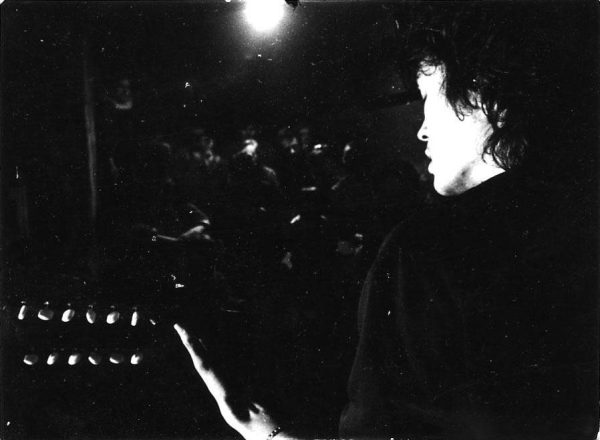
He falls asleep, and wakes later to head to the boiler room where Tsoi is performing. Igor wanders the basement and gets directed to a room where Tsoi is performing “Sunny Days” (Солнечные дни) alone for a small crowd sitting on the floor. Igor joins the crowd as Tsoi starts playing “We Will Continue To Act!” (Дальше действовать будем мы) for a final performance, intercut with footage of Tsoi working in the boiler room. The next day, Igor washes up and tends to his rooftop garden.
Despite the short production time and amateurity, “Yah-ha” would go on to win a prize at the Moscow Film Festival and cement a friendship between Nugmanov and Tsoi which would lead the two to produce a much more ambitious film later down the line, in our second story…
“Assa.”