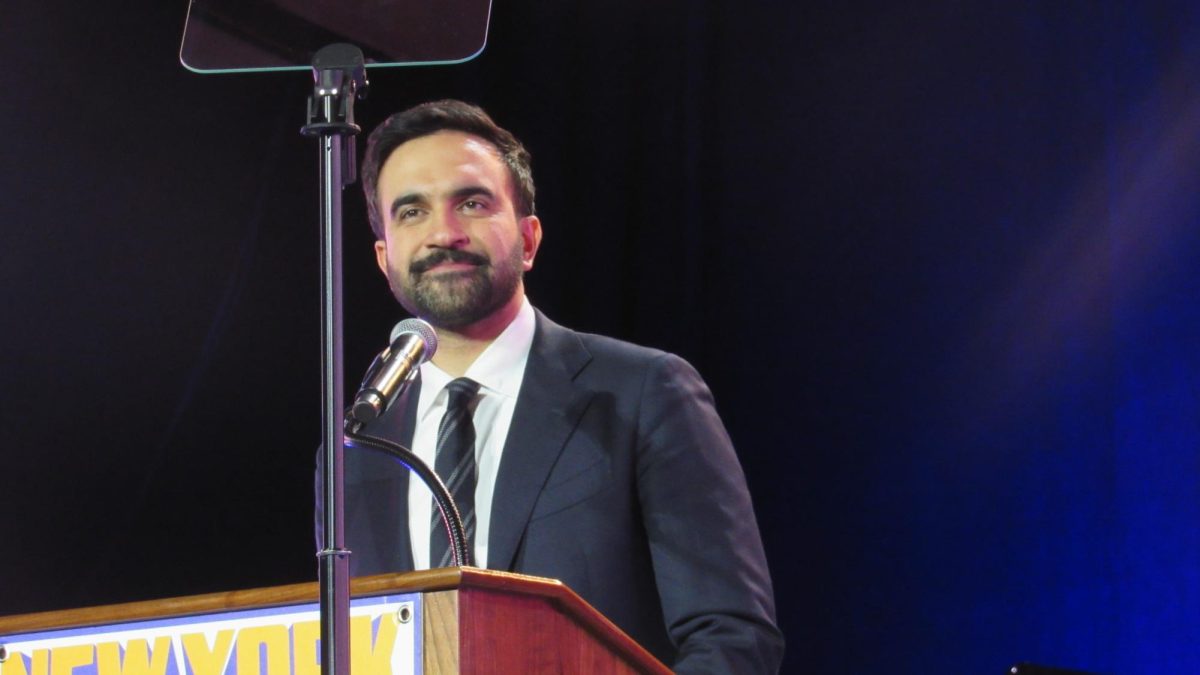


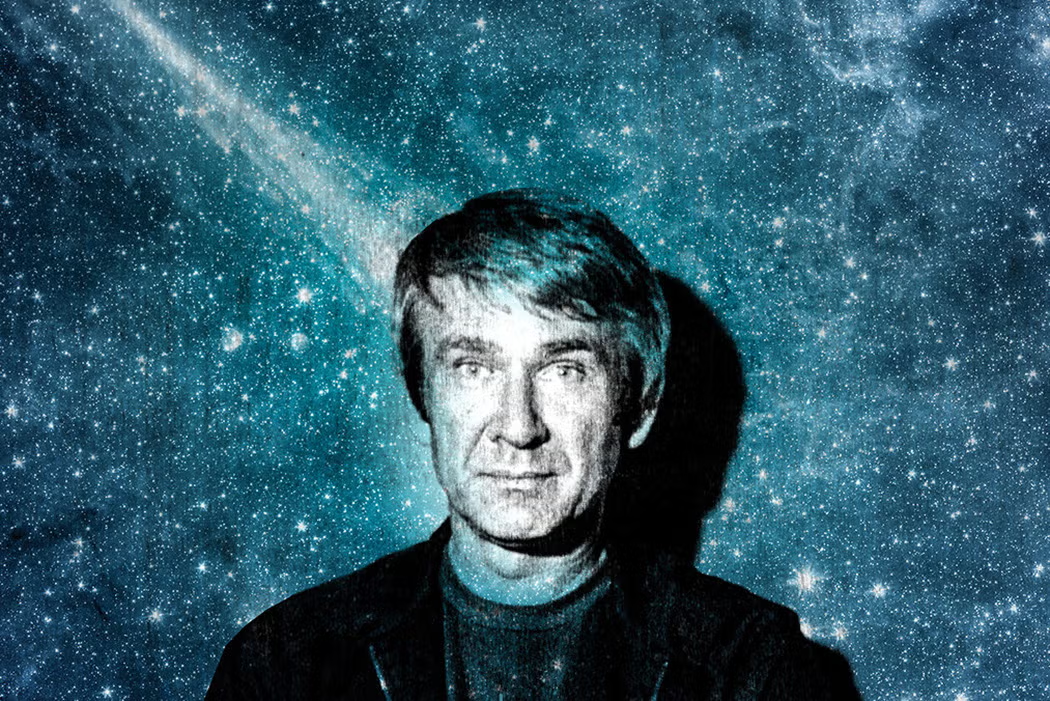














On Wednesday, Sept. 10, 2025, Charlie Kirk, 31, was fatally shot at Utah Valley University in Orem, Utah. This was Kirk’s first stop on his ‘college speaking tour’ called The American Comeback Tour.
Kirk promoted a “revival” of Christianity and supported the Second Amendment and gun rights. He also denounced abortion, affirmative action, and transgender policies. According to WSJ’s Aaron Zitner, Kirk was a member of President Donald Trump’s inner circle, receiving praise directly from Trump for being one of the people most responsible for his election in 2024.
So what, in particular, was the motive of Kirk’s assassin?
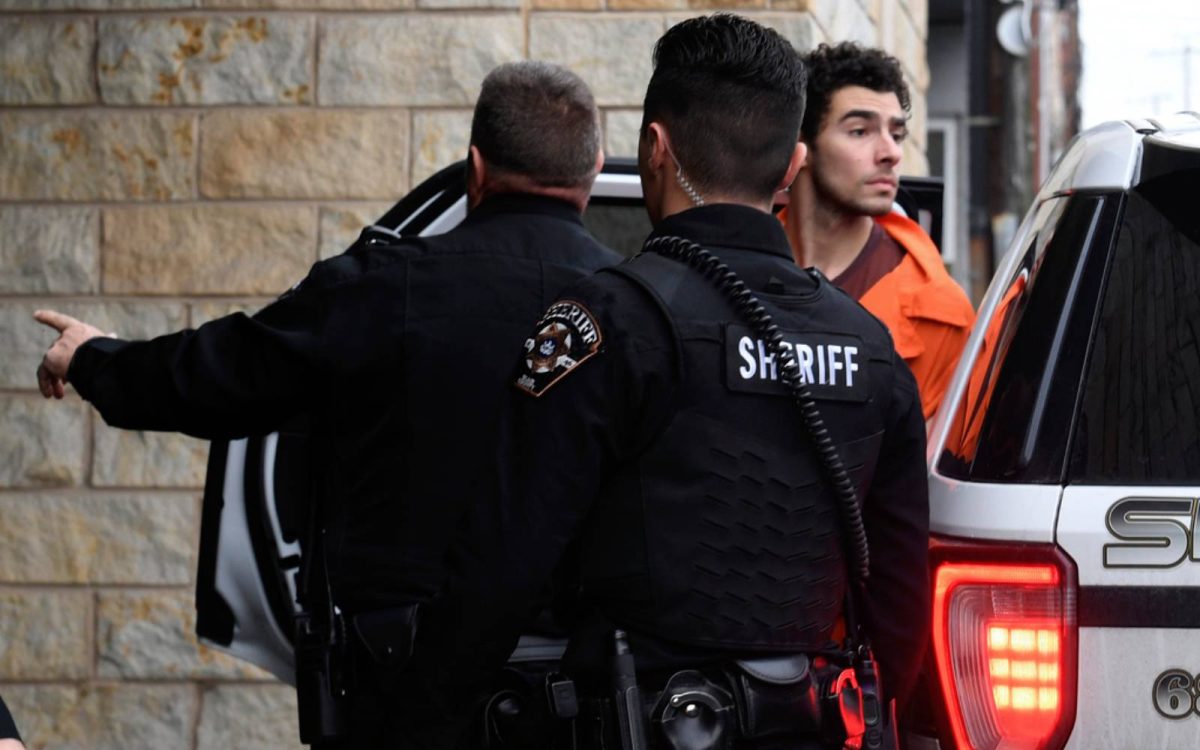
On Sept. 11, 33 hours after the assassination occurred, 22-year-old Tyler Robinson was detained for the murder. As per the charging document, Robinson had become more “pro-gay and trans-rights oriented,” and was in a relationship with his roommate, who is in the midst of transitioning. The document also details that Robinson’s explanation for his actions was that “there is too much evil and [Charlie Kirk] spreads too much hate.” This has led many to infer that Robinson shot Kirk due to his disagreement with Kirk’s anti-trans expressions.
However, this isn’t the only act of political violence that has occurred in the United States in the 2020s. President Trump made a statement asserting, “Heinous assassinations and other acts of political violence in the United States have dramatically increased in recent years… [Charlie Kirk’s assassination] was preceded by the 2024 assassination of a senior healthcare executive and the 2022 assassination attempt against Supreme Court Justice Brett Kavanaugh.”
Other instances of political violence/unrest include the insurrection on the US Capitol in 2021, the attack on Paul Pelosi -former House Speaker Nancy Pelosi’s husband- in 2022, and the stalking and assassination of Melissa Hortman -Speaker of the Minnesota House of Representatives- and her husband in 2025. The combination of these incidents in such a short period of time have caused various concerns to arise with the ability to speak freely and express political opinions in the United States without the possibility of harm.
Press and Media
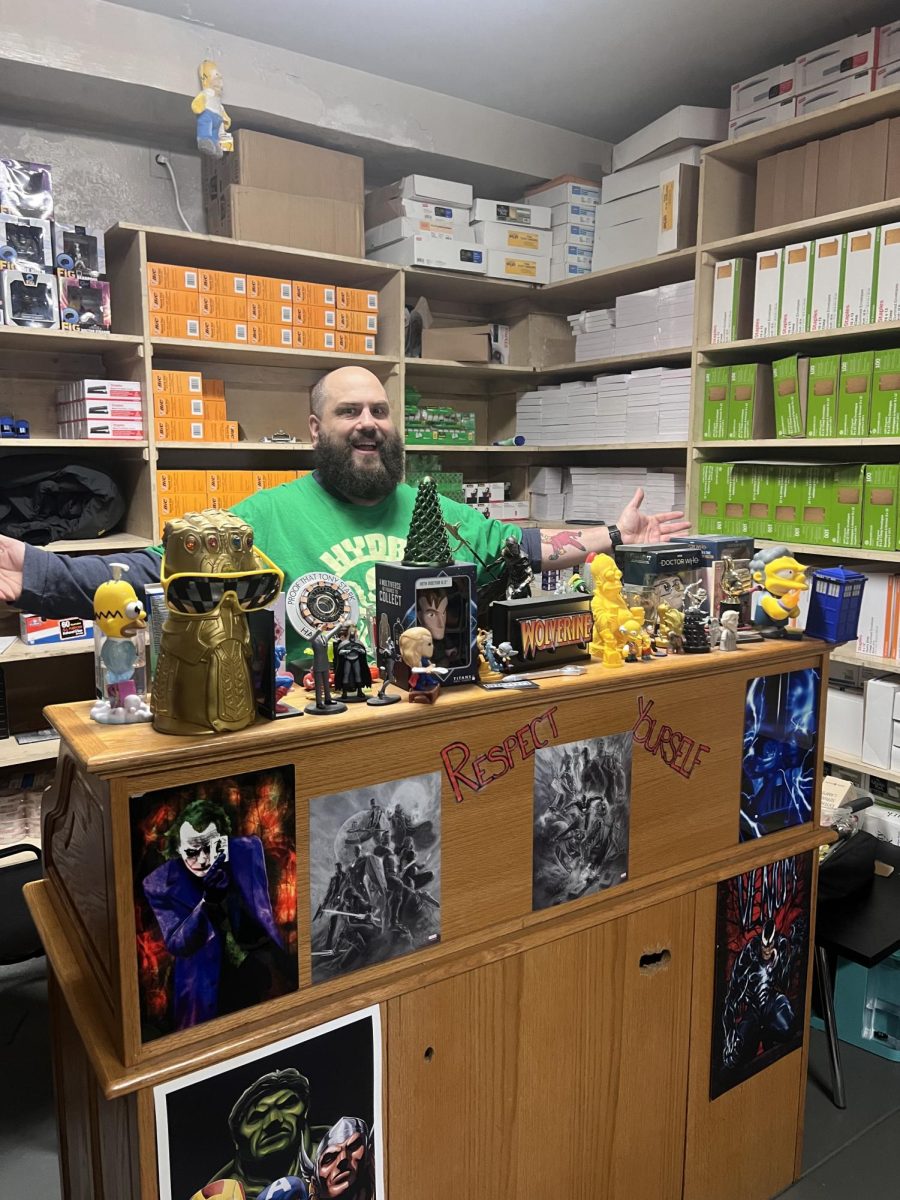
These concerns of expression of free speech have not only been spurred on by political violence. But also by great turmoil involving the press. Forest Hills High School Law teacher, Mr. Meiri, highlights the United States’ emphasis on freedom of press, stating, “Generally speaking, the idea is that we want to let newspapers have the right to publish things … and letting them sometimes make mistakes and get things wrong rather than … restricting what they can say because of the belief that newspapers are important and news media in general is important for holding powerful people accountable.” One newspaper has been particularly involved in such turmoil is The New York Times.
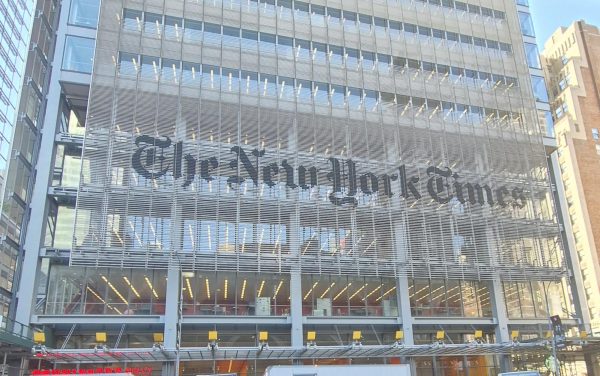
President Trump has filed multiple lawsuits against The New York Times over the past few years. The most recent complaint was filed on Sept. 19, 2025, stating that after President Trump’s re-election in 2024, The New York Times “continued spreading false and defamatory content about President Trump.”
It goes on to suggest that The New York Times is defaming the president, stating, “The Times has betrayed the journalistic ideals of honesty, objectivity, and accuracy that it once professed,” and “the newspaper’s editorial routine is now one of industrial-scale defamation and libel against political opponents.”
Four days after this complaint was filed, the case was struck by a Floridian district judge, who wrote, “As every lawyer knows (or is presumed to know), a complaint is…not a protected platform to rage against an adversary.” As per the expressed instructions, the complaint was amended within the following 28 days.
The New York Times is not the only news organization that has faced lawsuits from the president. According to ABC News, Trump filed a $10 billion defamation suit this past July against The Wall Street Journal. The Journal had reported that Trump allegedly sent Jeffrey Epstein a seemingly inappropriate, letter in 2003, as a part of a book made for Epstein’s 50th birthday. When commenting on this pattern of the Trump administration’s lawsuits against news organizations, Mr. Meiri observes, “…there have been other presidents in the past and other political figures in the past who have tried to repress that [freedom of press] to different levels. But what we’re seeing here is like an attempt to bury a new story that is unflattering to a politician.”
The political turbulence stretched into the TV industry in September. After making comments on Charlie Kirk’s assassination, such as stating that the “MAGA gang” was “desperately trying to characterize this kid who murdered Charlie Kirk as anything other than one of them,” Jimmy Kimmel was briefly taken off air.
According to FCC chairman Brendan Carr, he was “appearing to directly mislead the American public.”
Mr. Meiri clarified the legal parameters of this situation, stating, “The defamation case there would be extremely weak because he did not specifically name a particular person and say ‘I think so and so killed Charlie Kirk.’”
The most recent discrepancy regarding the media is President Trump’s threat to sue the BBC for $1 billion via letter. According to The New York Times, Alejandro Brito, one of the president’s lawyers, wrote that a BBC’s documentary regarding the president’s speech on January 6th of 2021, the day of the attempted Capitol siege, was edited to create the impression that President Trump was imploring his supporters to commit violent acts. He stated that this editing was “malicious” and “disparaging.”
Protests
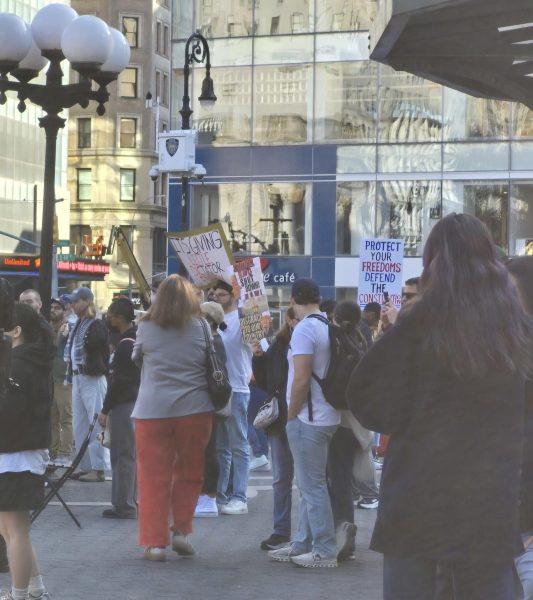
One cannot speak about freedom of speech and the First Amendment without addressing “the right of the people to peacefully assemble.” In other words, protests. Protests have been running rampant in the United States this year, particularly the “No Kings” protests.
“No Kings” describes themselves as a “movement rising against his [Trump’s] abuses of power.” Major “No Kings” rallies occurred on June 14 and Oct. 18 in major cities such as New York City, San Francisco, Philadelphia, and Kansas City. There have also been a great number of protests over federal immigration arrests, with some conflicts, such as outside an immigration processing center in Broadview (west of Chicago), occurring between protestors and the agents.
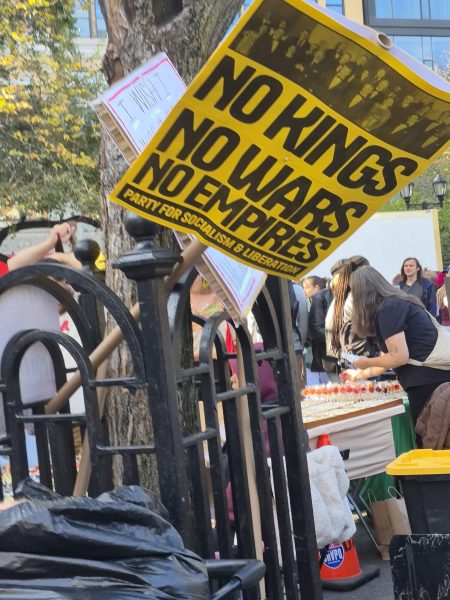
As many examples as there are highlighting possible suppression of speech in the United States today, a major question that arises is, ‘is this anything new?’ Is this, as some have said, the worst the nation has been in terms of political repression?
Mr. Meiri states, “It’s hard to answer that question because this country has gone through a lot of waves of political repression… It’s been, unfortunately, part of this country’s political legacy in a lot of ways that I think people are nervous to grapple with, because we’re seeing it in a way that’s very uncomfortable right now.”
He also sheds some light on the situation explaining, “I think there is reason to be concerned… but also there’s reason to be hopeful… Something that inspires me every day when I come here to teach is that students really know how to speak truth to power in a lot of ways and can feel comfortable raising their voices against things that they think are unfair… Y’all are awesome as advocates, and you have so much power to shape the world in your image.”