























When one thinks of the holidays, they tend to think about their favorite Christmas specials, all about how the characters care for each other and definitely don’t care about presents.
Now, imagine if one day, they disappeared.
You Google search what’s happening and it’s as if these films never existed, aside from a small subset of people experiencing the same phenomenon. One of your favorite things would now be classified as lost media.
Lost media is defined as any form of media, whether that be footage, artwork, physical objects, prototypes, or animations, that no longer exist or is not easily accessible.
The cause of lost media can come from many factors. For example, in movie theaters, people see giant cutouts of the characters, advertising the movie and release date. Once a movie has finished its theatrical run, studios often destroy these promotional boards, re-purpose them, or sell them to bidders at auctions.
However, the destruction of the media isn’t always purposeful. Back then, when films were preserved on tapes, they were susceptible to physical decay, and dramatic events such as fires or floods.
Or some causes are as simple as the creator(s) being reluctant to release the materials.

With the new “age of information,” the discussion regarding lost media has grown substantially.
A large community of people have dedicated themselves to preserving all types of media despite the difficulties that come with it.
Christmas has a large amount of lost media, including some popular movies, TV shows, and music.
Television
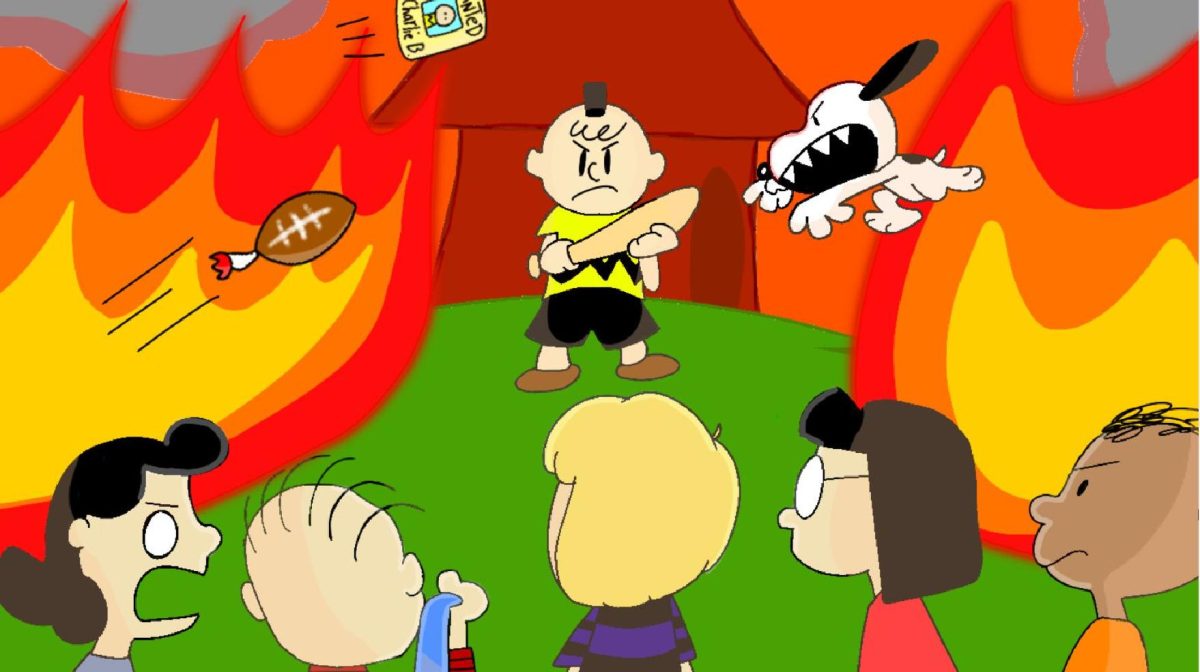
“A Charlie Brown Christmas” is among one of the most iconic Christmas specials of all time. However, even one of the most revered classics of all time has a missing portion that not many are aware of.
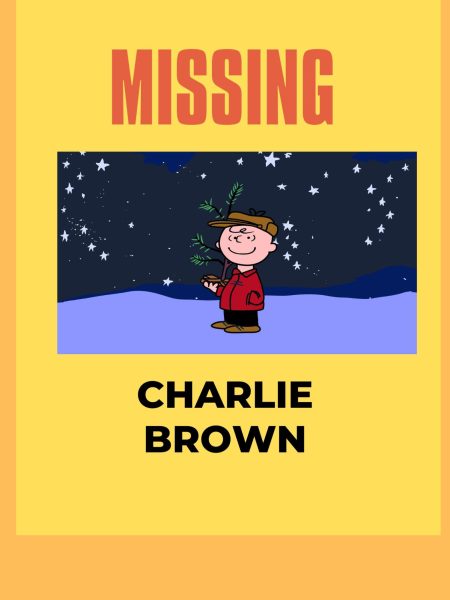
Charlie Brown image Hoptown Chronicle (Simran Sehgal )
According to the Lost Media Wiki, in early 1965, companies such as Coca-Cola, attached promotions at the beginning and end of the special to market the soft drink. Later, in 1967, the Dolly Madison company also sponsored the special, advertising their snacks on the program. This continued for years until 1971, with many more specials getting the sponsors attached such as Charlie Brown’s all-stars; “It’s The Great Pumpkin, Charlie Brown” and many more. In 1972, FCC laws prohibited the usage of sponsorships embedded in programs, thus resulting in them being cut out of rebroadcasts and home media releases. While some of the promotions remain lost or partially found, “A Charlie Brown Christmas’” advertisements have been found and can be watched on Youtube.
Film
Though “The Nightmare Before Christmas” is technically considered a Halloween film, one of the more “Christmassy” aspects of it has an interesting piece of lost media. Santa Claus, as portrayed in the film, is voiced by Edward Ivory in the final version. However, there was a point in production where iconic horror actor Vincent Price was considered for the role.
In an interview with The Daily Beast, director Henry Selick stated that they recorded some lines with Price, but was later replaced because of Price’s diminishing health. According to the Lost Media Wiki, there is little evidence proving that the tapes exist in any form, leading to much debate about its existence. Additionally, due to circumstances surrounding its burial, many lost media connoisseurs do not believe it will ever be released.
“A Christmas Story” is a Christmas comedy film released in 1983. It follows the story of Ralphie, as he dreams of his ideal gift while avoiding issues in his life. According to The Lost Media Wiki, this film’s lost media stems from deleted scenes which resulted from editors being pressured into maintaining a 90 minute runtime. One deleted scene is a dream sequence, where Ralphie dreams about his teacher trying to persuade his mother to purchase a toy for him, later turning into a dream about his favorite characters.
Another scene is also a fantasy sequence involving Ralphie saving Santa Claus from his kidnappers. Additionally, there was another shot of a character named Old Man carrying a broken leg lamp outside. Unfortunately, these scenes have never been found. The editor, Stan Cole, stated that the tapes are archived somewhere, whereas, the actor who played Ralphie said that the scenes are “gone forever.” Fortunately, there is evidence that these scenes existed, as the costumes used for the scenes have been preserved, providing hope that one day these scenes will be found.
Music
“White Christmas” is a Christmas song has a special version many may have never heard. Though the song was released in 1942, Bing Crosby originally performed the song on radio in 1941. According to The Lost Media Wiki, the song was featured on The Kraft Music Hall, Crosby’s NBC show as a part of a special Christmas themed broadcast. The song has since not been played fully until December 2011, for its anniversary. A low-quality portion of the song was played on the CBS News Sunday Morning’s Christmas broadcast with narration over it. However, the full 1941 broadcast was actually found in 2018. A Lost Media Wiki user, who got in contact with Malcom Macfarlane, an editor of the BING magazine, uploaded the complete recording. You can watch it on Youtube if you’re interested.
International/Foreign
Though the story of Santa Claus and the North Pole were American-created concepts, that has not stopped other cultures from giving their own interpretations on the classic character. “The Life and Adventures of Santa Claus,” is a 1996 Japanese anime series based on the fictional novel written by L. Frank Baum. The series followed Santa Claus before he became the iconic character that is well known today. According to The Lost Media Wiki, the show was short-lived, only lasting 24 episodes and only airing for a couple months in 1996. Before the series was found, only the introduction theme along with its animation was available online, prompting a search for the rest of the series. On November 20th, 2021, the series in its entirety was uploaded on Youtube. It is unclear if there was ever an English dub produced for this anime.
While some forms of lost media may seem insignificant and not worth the extensive searches to recover, lost media often contains historical, cultural, and sentimental significance. There is undoubtedly tons of work that goes into all forms of media, and it is unfair to deem some as unimportant. All forms of media should be preserved in its highest possible quality, so they can keep entertaining and inspiring people for generations and generations to come.