
















This article has been one long in the making.
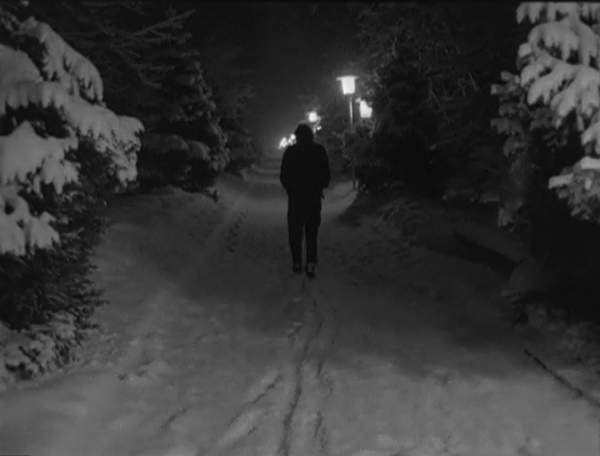
Winter is here. Cold winds buffet the streets, snow falls, and the world slows down. You can feel the school year winding down too, though you know it won’t be over soon. Yet, in the moment, it feels good to take things easy and fly through the few weeks to winter break.
Just the very word – winter – evokes comfort, hearing the hiss of gas through the heater and the shuffling of the sheets as you bundle up in bed. It’s a feeling you can never exhaust, so it’s not worth giving a twist on it or some other subversion of expectations.
There’s not going to be a story of wanton violence or corporate greed waiting for you around the corner, so simmer down, why don’t you? Fix yourself something and get your earbuds on as we tune into…
Кино.
[Kino.]
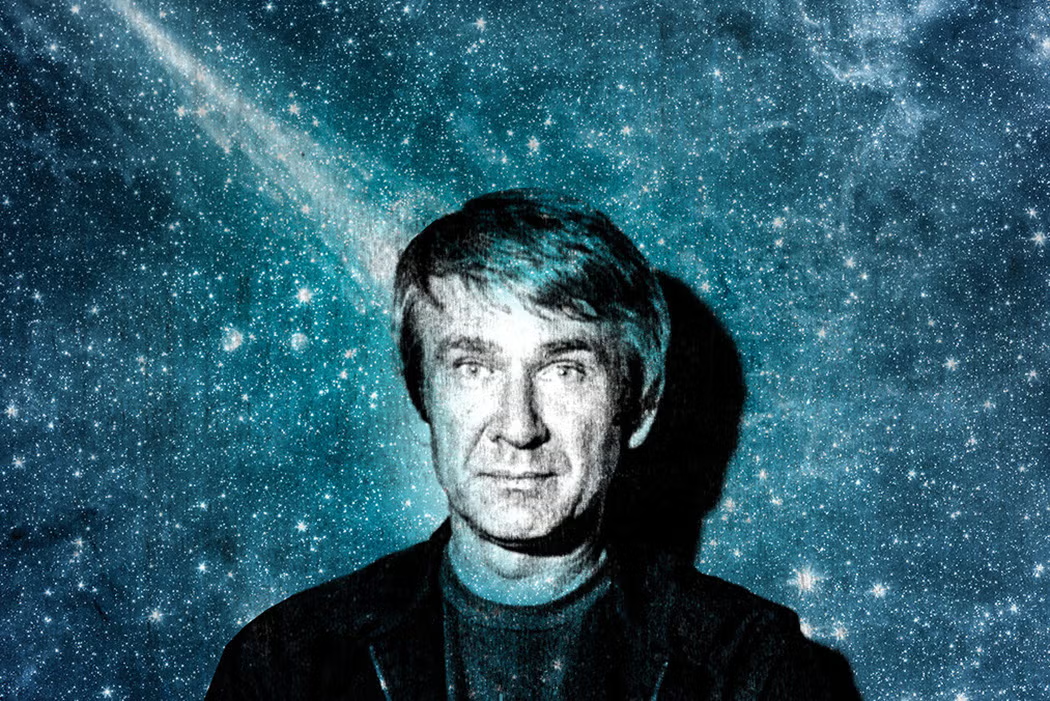
Through connections in the underground rock scene in Leningrad, Tsoi would meet Aleksei Ribin and form Garin and The Hyperboloids [Гарин и гиперболоиды], based around their common musical tastes like The Beatles, The Rolling Stones, Elvis Costello and Genesis, and started work on their first album, ‘45’. Tsoi would be the band’s songwriter and guitarist, enlisting the help of the band Akvarium (led by Boris Grabishnikov) to help record the album because the band only had two members. The final album would have a very balmy sound with the rudimentary recording equipment available to them, especially evident with features of the album like ‘Aluminium Cucumbers’ [Алюминиевые огурцы] and ‘Got Time, But No Money’[Время есть, а денег нет]
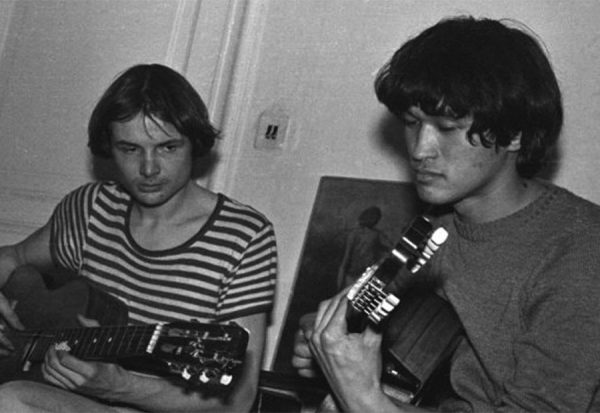
Rectifying this, Tsoi asked Ribin to find a bassist, returning with Max Kolosov and Yuri Kasparyan, the latter born in Simferopol and similar to Tsoi in how they slacked through music school; Kasparyan missed a final exam and lost his diploma from music school when he attended a snowball fight with kids from his apartment block instead. However, when their label posed the opportunity for a second album, Tsoi wanted to record with Akvarium instead of Kolosov and Kasparyan, thinking they weren’t ready. Ribin disagreed, and the two stopped speaking and parted ways.
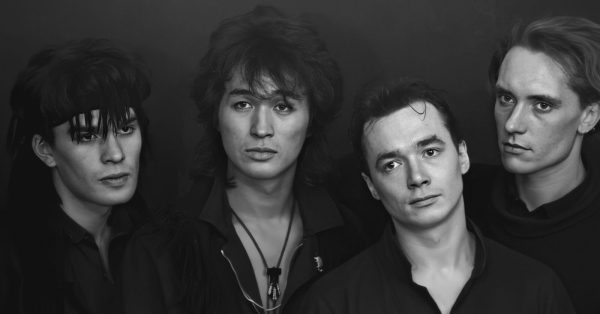
After his departure, Tsoi and Kasparyan kept practicing together, with their second (disputed) album, ‘46’ being released by their producers Alexei Vishnya and Andrei Tropillo. Alexander Titov, a talented bassist recommended to Tsoi by Grabishnikov at the former’s wedding party and Georgy Guryanov, a balalaika player turned drummer who admired Tsoi’s neo-romantic image and personally offered to join the band after meeting him in the subway. Together, as a quartet, they would produce Nachalnik Kamchatka and Eto Ne Lyubov. Though, Titov would return to Akvarium and be replaced by Igor Tikhomirov, cementing the golden line-up for the band’s other albums.
Joanna Stingray, a friend of Grabishnikov from the U.S., would smuggle tapes of Kino’s performances at concerts in Leningrad and release it as the album “Red Wave” in the States, featuring alongside Akvarium, Alisa and Strange Games and sparking interest in Soviet rock in the West. The Soviet Union’s only record label at the time, Melody, released albums from the bands featured to downplay the government’s heavy-handed censorship of rock under Konstantin Chernenko. Melody’s Leningrad branch, led by Andrei Tropillo, would release the band’s third album, Noch [Ночь], without Tsoi’s knowledge, leading him to go with another publisher, Alexei Vishnya.
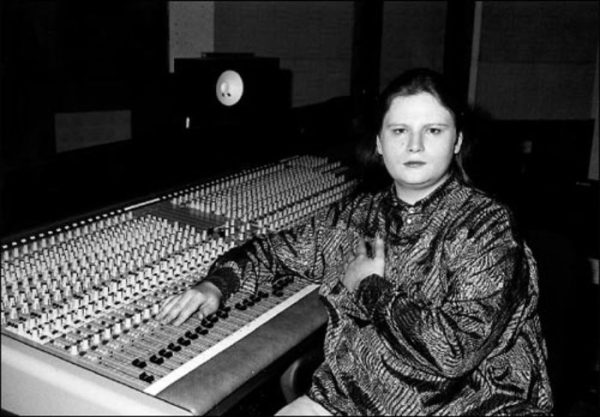
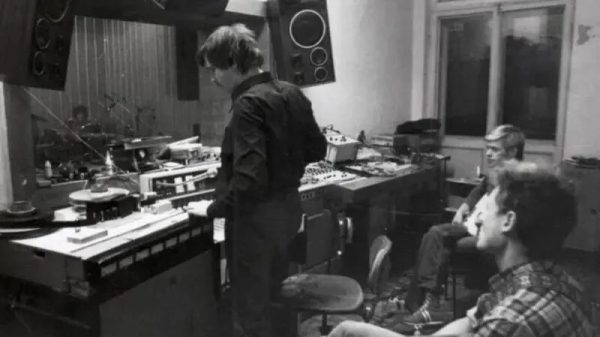
Joanna’s gift of a Yamaha MT404 portable studio and a Yamaha RX11 drum machine allowed Kino to record independently in Kasparyan’s apartment and record their next album in Vishnya’s home studio. Like Tropillo, Vishnya would release Gruppa Krovi early to get the album to the most people as possible, as fast as possible. Though Tsoi was less than pleased, the album launched him to superstardom within the underground scene, his name becoming ubiquitous although the state press refused to address him.

His success was increased by “A Star Named Sun” [Звезда по имени Солнце], with performance offers coming from abroad. He was invited to Denmark by journalist Jon Kaldan to raise money for humanitarian aid following the 1988 Spitak Earthquake, and France per the behest of their minister of culture, Jacques Lang. While touring Europe, his songs would be released for European markets, like “Rocking Soviet” by Joël Bastenaire piled in with other bands or Le Dernier des Héros by Off the Track Records, a compilation of their best songs.
Though, with all these successes, Kino had lost its image of being an unconventional band. When they were segregated from the mainstream, they played by their own rules. But once they became mainstream, they had to follow the strict standards expected of any other band. Their final concert, arranged by the Moscow Young Communist newspaper and held in Moscow’s Olympic stadium, saw an unanticipated 70,000 people come to attend. At the end, he promised a new album and film, promises that would never be fulfilled in his lifetime.
Tsoi and his family visited the Latvian SSR for a vacation after the Moscow concert, staying in the fishing village of Plienciems far from the capital and prying eyes of fans. On August 15th, 1990, Tsoi would drive out to a nearby lake to fish. On the return trip, empty-handed, Tsoi lost control of the wheel at a sharp turn, swerved into the oncoming lane and collided head-on with a bus. The crash was so violent that he was pronounced dead on the scene by emergency responders, and one of the wheels of his car was never found. His death would prove a shock to the rock world, with thousands of fans gathering at the cemetery where he was buried and visiting his gravesite after a closed-casket funeral attended by his family.
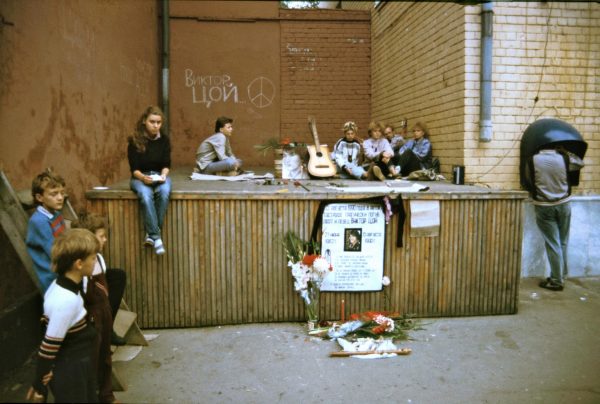
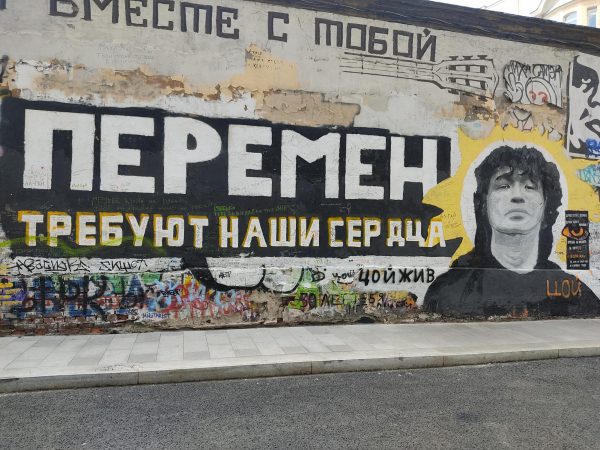
In light of his death, Kasparyan would publish the band’s final album, unnamed but colloquially called ‘The Black Album,’ and later announced the end of the band in a press conference. The band would reunite a few times afterwards, for the release of Ataman (a single meant to feature on ‘The Black Album’) on Tsoi’s 50th birthday in 2012, and a handful of live albums and remakes of old releases. Tsoi’s legacy isn’t forgotten, with his life memorialized with his music and the many monuments around Eastern Europe erected in his honor, like the Tsoi Wall in Moscow or “Kamchatka”, the boiler room where he worked for most of his later career.
With all this in mind, take a moment when you can and listen to the band’s discography to honor Tsoi and all he’s done for European rock.
Stay weird, Forest Hills.