














The whispers in the dark.
The shiver that dances along your skin.
The dreams that feel too precise to ignore—do they hold a deeper meaning? Or is it simply your mind painting stories to fill the silence of the unknown?
The occult has been taboo since the beginning of time. Ever wonder how the history of vampires began and why the media depicts them as monsters when they were simply misunderstood due to limited medical knowledge about the dead?
Anthropology and Social Studies teacher Ms. Glass provided an extensive background on how the occult came to be and the misinformation surrounding the “supernatural.”
“The occult is just different perspectives,” she shared. In the past, any belief differing from majority religions was ostracized.
There are also harmful aspects within society. “Have you ever heard of Albinism? It’s a congenital condition that causes a lack of pigment in the skin, hair and eyes of humans. Across African nations, body parts of people with albinism are sold and trafficked since it’s believed that charms made from albino body parts can bring in luck, power, and success,” said Ms. Glass.
Such tragedies occur mainly from a lack of education surrounding superstition, history, and biology.

When it comes to the fear of the unknown, Ms. Glass said, “It depends on the individual’s spirituality and beliefs. We are trying to create order from chaos.” Essentially, the idea of the supernatural isn’t impossible, yet curiosity toward it is an intrinsic human trait.
But what about people claiming first-hand experience with the supernatural? Can science explain it, or is there truly something more?
Ms. McDermott, English teacher, has her own views. “I am a little mixed… I think I try to play it off in my mind that I am not scared of these things just to protect myself.”
People form beliefs based on personal experiences. For Ms. McDermott, a key experience for her happened in college. “My friends and I went to go see a psychic on a Friday night. The last time I went, [the psychic] asked if I owned an Ouija Board and I said yes. She told me to go home and throw it away immediately because it was bringing in evil spirits that I couldn’t get rid of. So I haven’t been to a psychic since.”
She added, “For a lot of people I think the fear kind of deters [you] from learning more about it.” As someone with first-hand knowledge of something not easily explained, skepticism and curiosity become more innate.
When asked about fear of the occult, she said, “Death is kind of scary. You know, like what happens after death, no one really knows.”
She also emphasized that not everything supernatural is negative. “I do believe that when people pass, their spirits are with you in a positive way.”

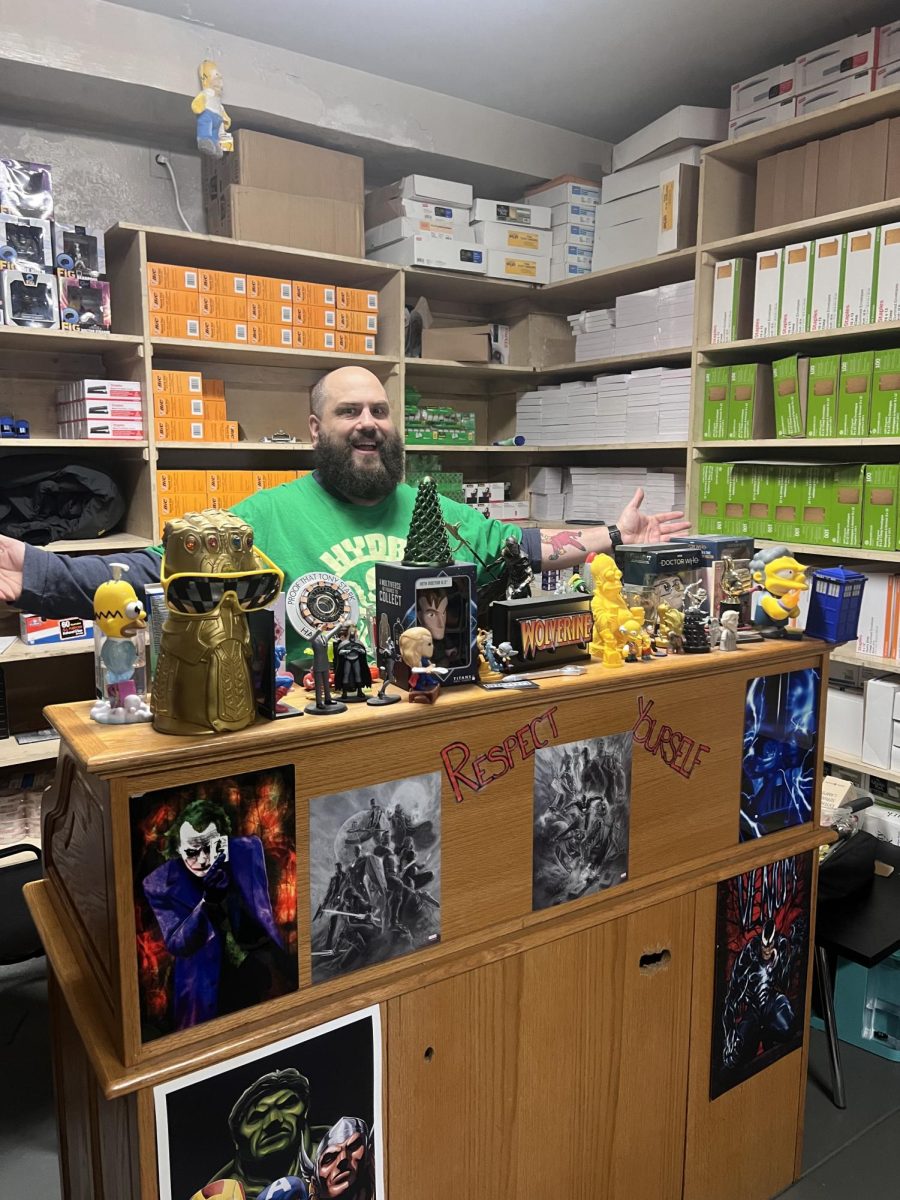
When it comes to the occult genre within literature, FHHS librarian Mr. Hetko said, “I think it’s a natural human tendency to try to complete a story, right? If you see something happening and you can’t tell why, it makes sense to come up with solutions that are a bit creative.”
He continued, “The human brain is incredible. If someone had a personal experience, I would never let anyone feel shut down. But at the same time I tend to look for a more scientific explanation.”
As a librarian and skeptic, when drawing the line between informative and misinformative books, he explained, “If an author is vigorously trying to convince you that what they are presenting is true without any backed-up evidence, that crosses the line.”
He added, “Interestingly, this kind of supernatural stuff is shelved with nonfiction—and that’s not just for us, but for libraries across the world.”
Regardless of whether there is truth behind the occult, it’s undeniable that it has shaped both culture and society and remains an overlooked aspect of history in most textbooks.
From a statistical perspective, according to an anonymous poll given via social media, 23% of responders believed completely in some form of the occult, like vampires, spirits, and more. 27% didn’t, and 57% were skeptical, but not dismissive.
When it came to fear of the occult, 20% shared that they are very scared of ghosts and the supernatural, while 63% aren’t scared, but prefer distance. 18% claim to not feel scared at all.
Most people don’t believe in the occult, yet more than half preferred distance if such things could exist. This shows that fear of the unknown often fuels skepticism.
With no scientific proof of otherworldly entities, it’s reasonable to doubt their existence—but it’s also human nature to fear what we can’t see.

